It is a profound realization that Frank Herbert's Dune - a work of science fiction conceived over half a century ago feels more like a mirror held up to our present day. When Herbert wrote of the Butlerian Jihad, he was less interested in the technology itself and more interested in the atrophy of the human spirit.
Are we this predictible? Perhaps it is less about predictability and more about the path of least resistance.
In Herbert's universe, the prohibition "Thou shalt not make a machine in the likeness of a human mind" wasn't born from a fear of robots holding guns; it was born from a fear of humans losing the ability to think for themselves.
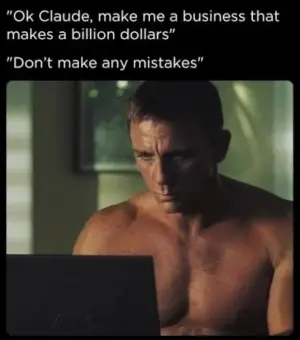
When you observe someone struggling to draft a simple email without an AI's intervention, you are witnessing the first stages of what Herbert warned against: the delegation of the intellect. By outsourcing our cognitive labor, whether it is summarizing data, structuring an argument, or even composing a thought, are we slowly surrendering our "mental muscle"?
The brilliance of Herbert's warning lies in the irony of the "war." In Dune, the war against thinking machines wasn't fought against an external enemy; it was a war to reclaim human agency from a crutch that had become a master.
"When the machine does the thinking, the human stops practicing the thought."
"When the machine provides the answer, the human stops engaging with the inquiry."
History suggests that humanity is remarkably consistent in its patterns of behavior. We consistently prioritize convenience over long-term autonomy. We have always sought tools to expand our reach, but we have rarely been good at setting boundaries on how those tools shape our cognitive landscape.
"The most dangerous machines are the ones that make us comfortable enough to stop thinking."I am not the one to point out that we are not on the brink of a bloody, interstellar crusade. However, we may be in the midst of a different kind of "Jihad"... a quiet, internal struggle to remain the primary architects of our own thoughts. This is certianly not a question of a sudden war. It is a question of whether we will slowly cede the territory of our own minds, bit by bit...